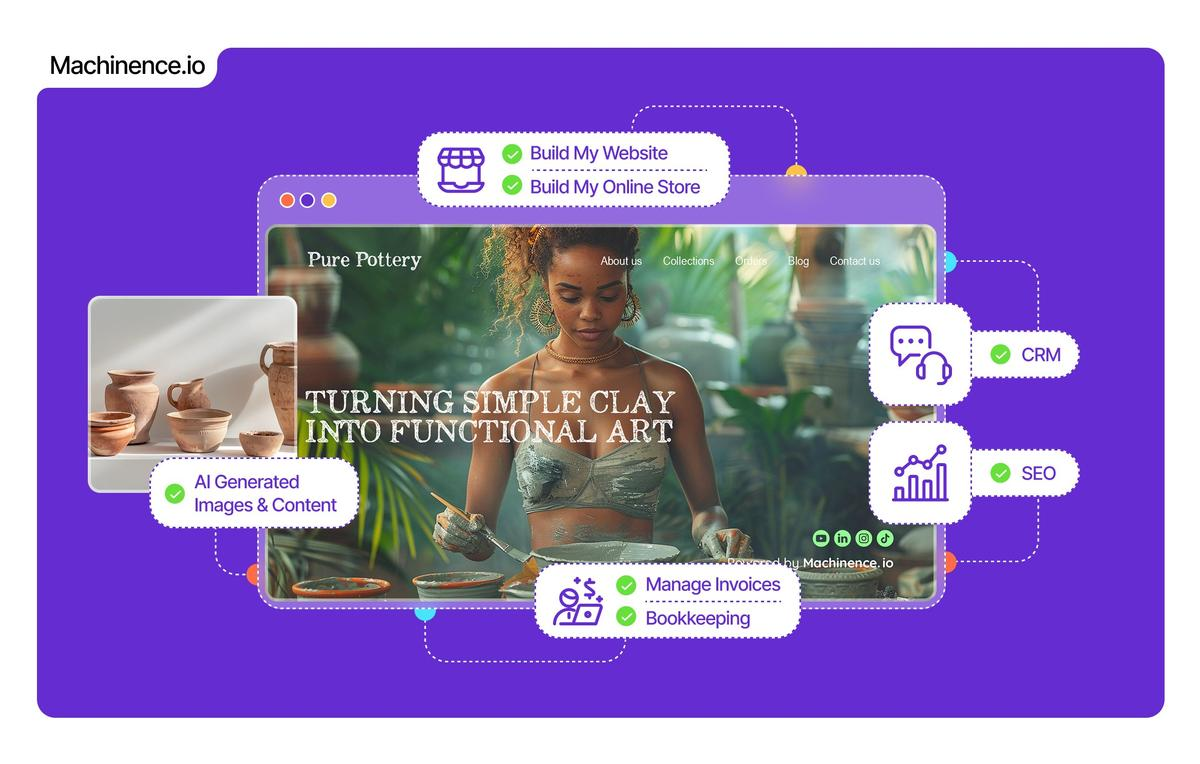
The Alternative to Upwork, Fiverr and Freelancer: Stop Bidding for Work and Start Owning Your Customers
You are good at what you do. You design, write, build, fix, teach or advise, and clients who hire you are glad they did. Yet every week starts the same way: refreshing a marketplace, writing another proposal, dropping your price to stand out, and hoping one rating does not undo a year of good work.
The numbers from the big three platforms tell you this is not just you. Buyers are leaving, competition is rising and the platforms keep a large share of every job. This article looks at the real figures, what each platform charges, and why more freelancers are deciding to stop renting customers and start owning them.
The numbers: buyers are leaving
In the twelve months to September 2026, the two biggest freelance marketplaces lost hundreds of thousands of buyers, and the third saw its freelance marketplace shrink by more than a quarter.
| Platform | Buyers or clients now | A year earlier | Change | What the platform keeps |
|---|---|---|---|---|
| Upwork | 717,000 active clients | 794,000 | down 10% | about 20% of all work bought |
| Fiverr | 2.4 million active buyers | 3.3 million | down 26% | 28.2% of all work bought |
| Freelancer.com | Marketplace work of A$19.1 million in the quarter | A$26.4 million | down 28% | 10% or US$5 per project, whichever is greater |
The buyers who stay are spending more each: about US$5,418 a year on Upwork and US$373 a year on Fiverr. On Freelancer.com, the average project is US$498. In plain terms, fewer customers, bigger jobs, and more freelancers fighting for each one.
None of the three publishes what an average freelancer earns. That silence says a lot: with millions of profiles and a shrinking pool of buyers, most people on these platforms are competing for very little.
What they actually charge you
Every platform takes a cut of your work, and most charge you before you have earned anything.
| Upwork | Fiverr | Freelancer.com | |
|---|---|---|---|
| Fee on each job | 0% to 15%, set by contract type and demand | 20% of every order, tips included | 10% or US$5, whichever is greater |
| Cost to apply for work | Connects at US$0.15 each, bought in packs of 10 | Free to list a gig | 6 free bids a month, with a US$20 minimum balance to bid |
| Paid extras | Freelancer Plus, US$19.99 a month | Faster payouts for top sellers | Sponsored bids up to US$14.90, highlighted bids US$1 |
| Waiting for your money | Paid after the client releases funds | Held for 14 days (7 for top sellers) | Released by milestone |
On a £1,000 job, that is up to £150 on Upwork, £200 on Fiverr and £100 on Freelancer.com, before currency conversion and withdrawal fees. And that is only on the jobs you win. Every proposal that goes unanswered still costs you time, and on Upwork it costs you Connects too.
Why it is so hard to win work there
The marketplaces were built to make hiring easy for buyers. That design works against the people doing the work.
New freelancers start invisible. A profile with no jobs and no reviews sits below profiles with hundreds. Buyers pick the safe choice, so talented newcomers can wait weeks for a first job, even when their work is better.
One rating can cost you the next client. A single low score, a late reply or a client who changed their mind can drag your rating down, whether or not it was your fault. On a marketplace, your rating is your reputation, and you do not control it.
You compete on price, not quality. When dozens of proposals land on every job, the easiest way to stand out is to charge less. Prices fall, and the platform still takes its percentage.
The customer belongs to the platform. Clients find you through the marketplace, pay through the marketplace and are discouraged from working with you outside it. If your account is paused or the algorithm stops showing you, your income stops with it.
You are building their business, not yours. Every review, every repeat client and every pound of fees adds to the platform’s value. When you leave, you leave with nothing.
The alternative: find your own customers
The customers are not inside a marketplace. They are businesses on your doorstep and around the world that need what you do and have never seen your profile. Machinence finds them for you.
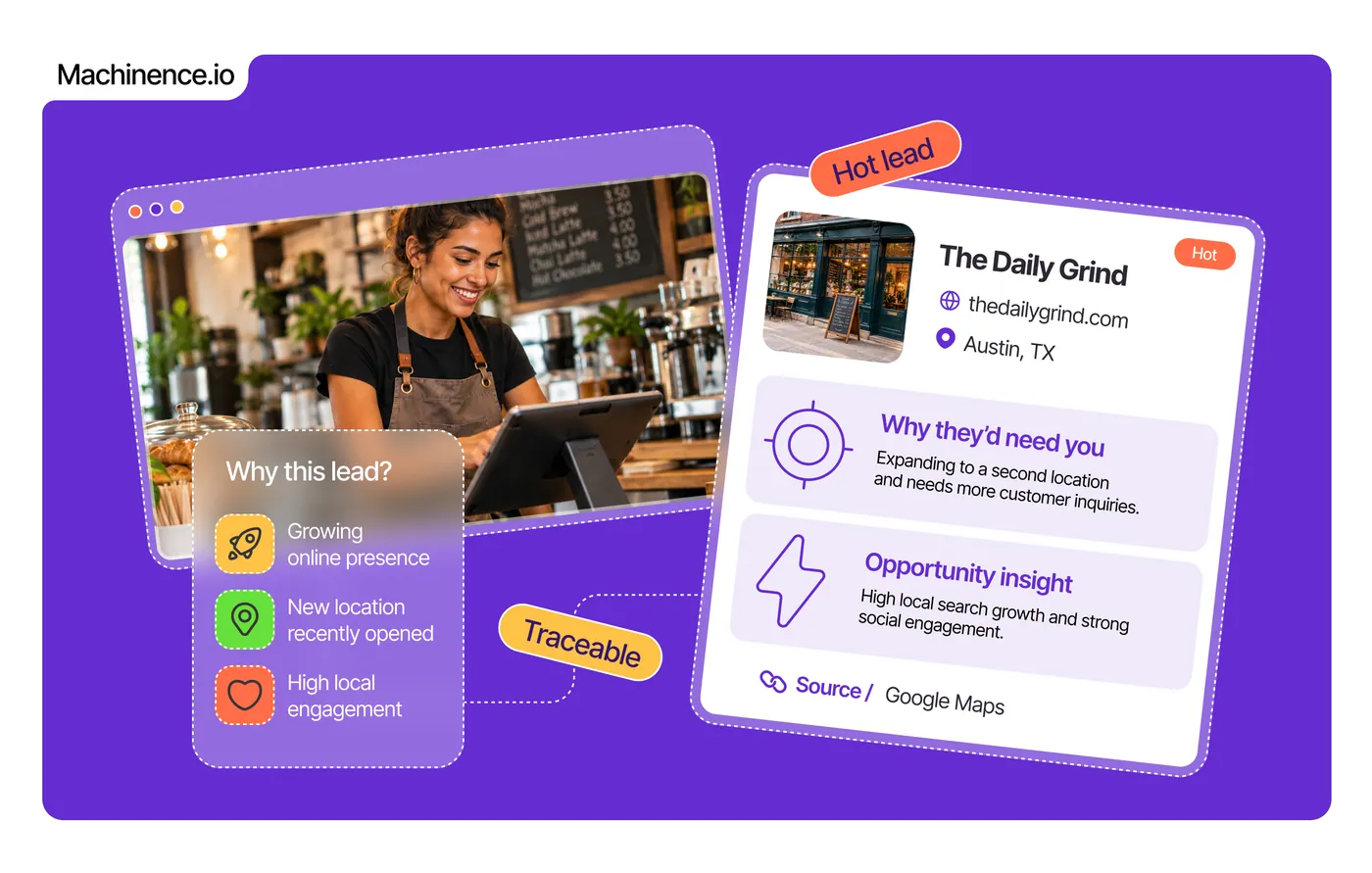
Tell Find Customers who you sell to and where, locally or worldwide. It searches the web, OpenStreetMap and, in the UK, the food hygiene register, and returns real businesses that could buy from you. For each one you get:
- A reason to contact them now, with a date: a new branch, a new opening, a recent change.
- Your first message, written for you: an email, a call script, a WhatsApp message, a LinkedIn note or a letter.
- The readiest to buy listed first, so you start with the warmest leads.
In our own tests, a brand new account got 5 real leads from one button in under 30 seconds. Each plan includes fresh leads every month: 60 on Launch & Scale and 150 on Enterprise & Market Leader, with more available whenever you need them.
No bidding. No proposal fees. No algorithm deciding whether you are seen. And when a business says yes, the customer is yours, not the platform’s.
Run it as a real business, not a gig
Finding customers is the start. Machinence gives you every tool to win them, serve them and get paid, in one login, so you look like the established business you are.
Your brand. Create your logo, name and brand kit in minutes, and search for your domain.
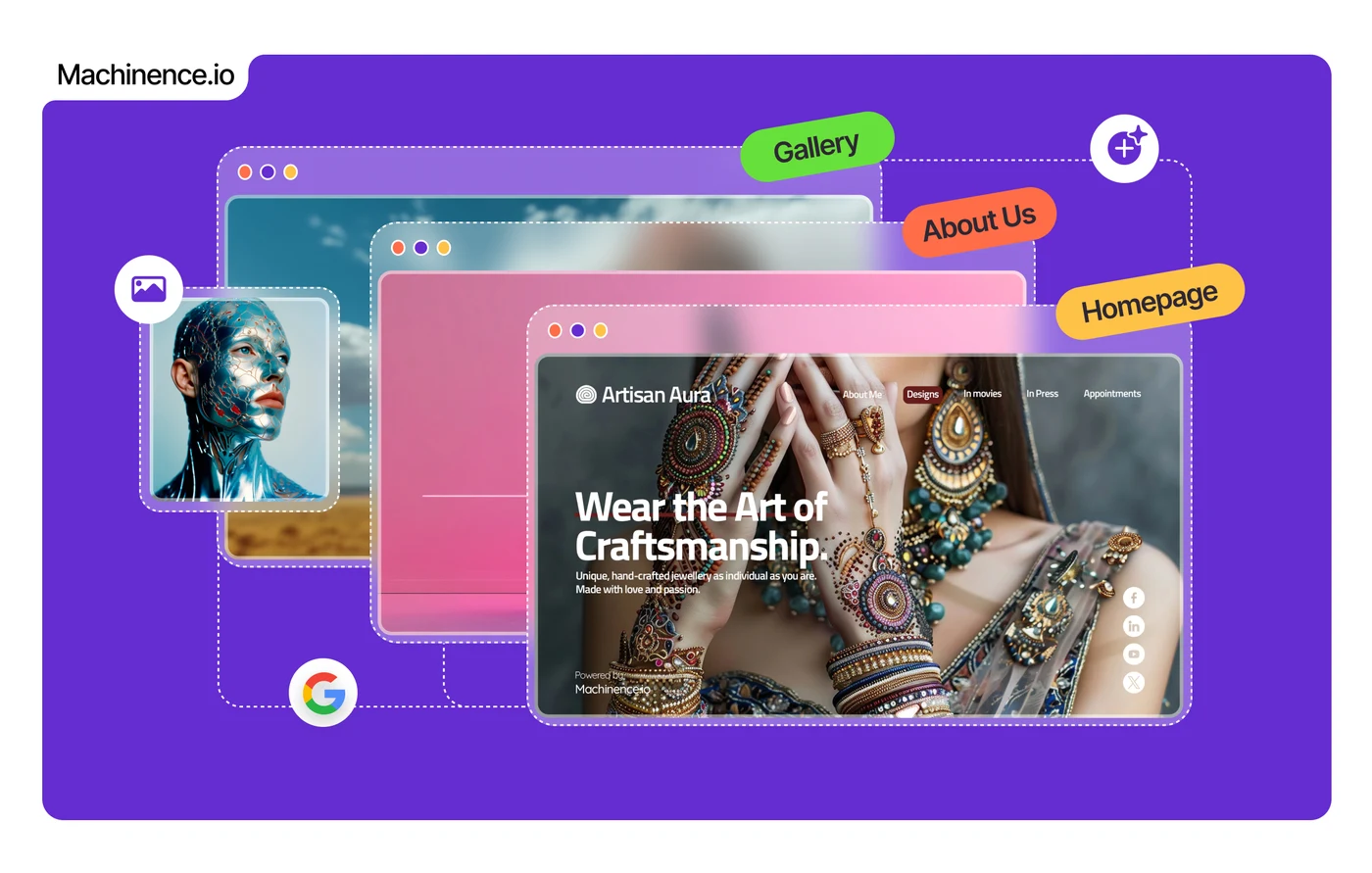
Your website and online store. The AI builds a professional website or store from a short description, with free hosting and a free SSL certificate. Clients find you on Google, not on a marketplace.
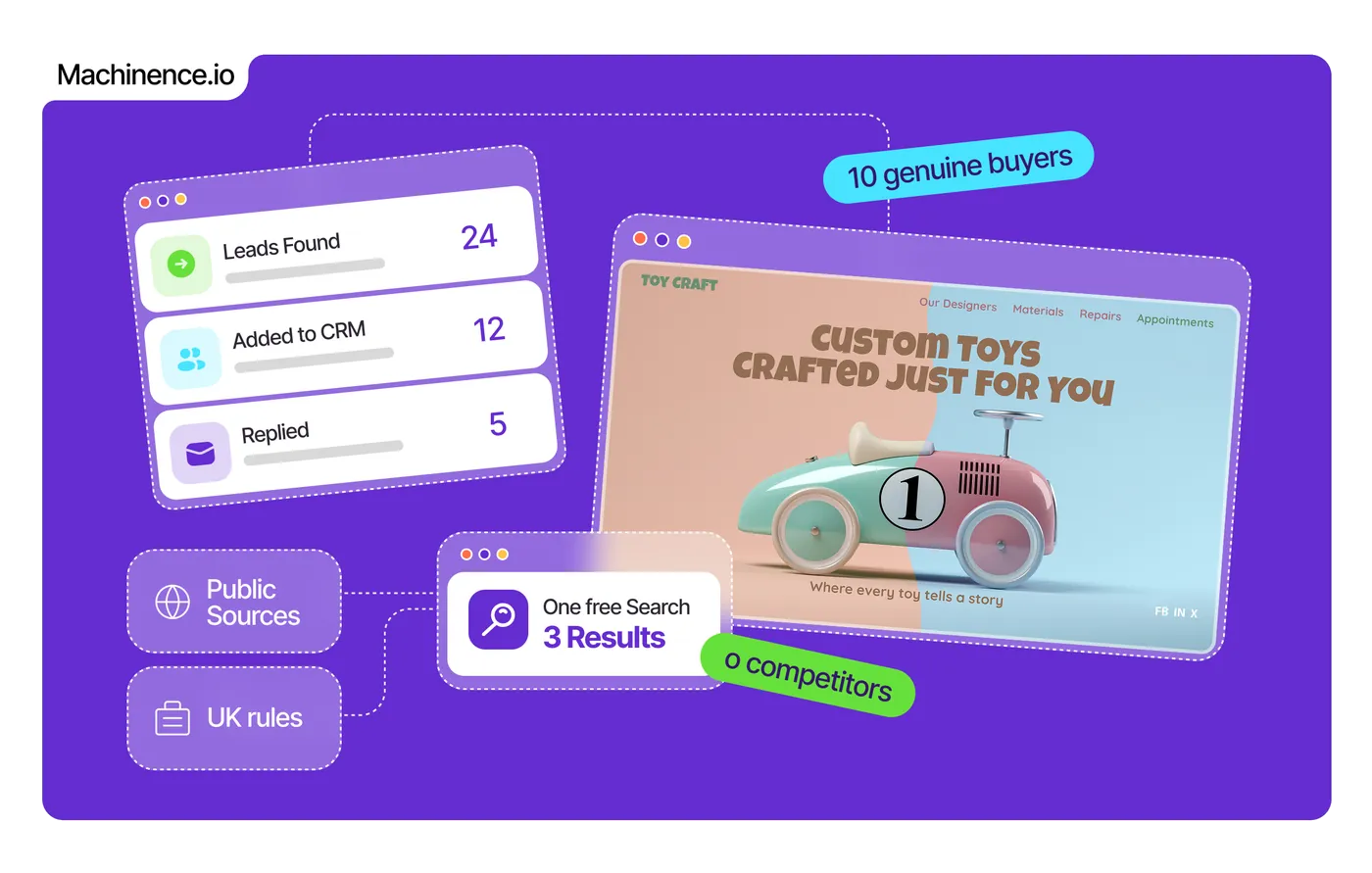
Your customers in one place. The CRM keeps every lead, email, invoice and payment in one record, with a pipeline so no follow up is forgotten.
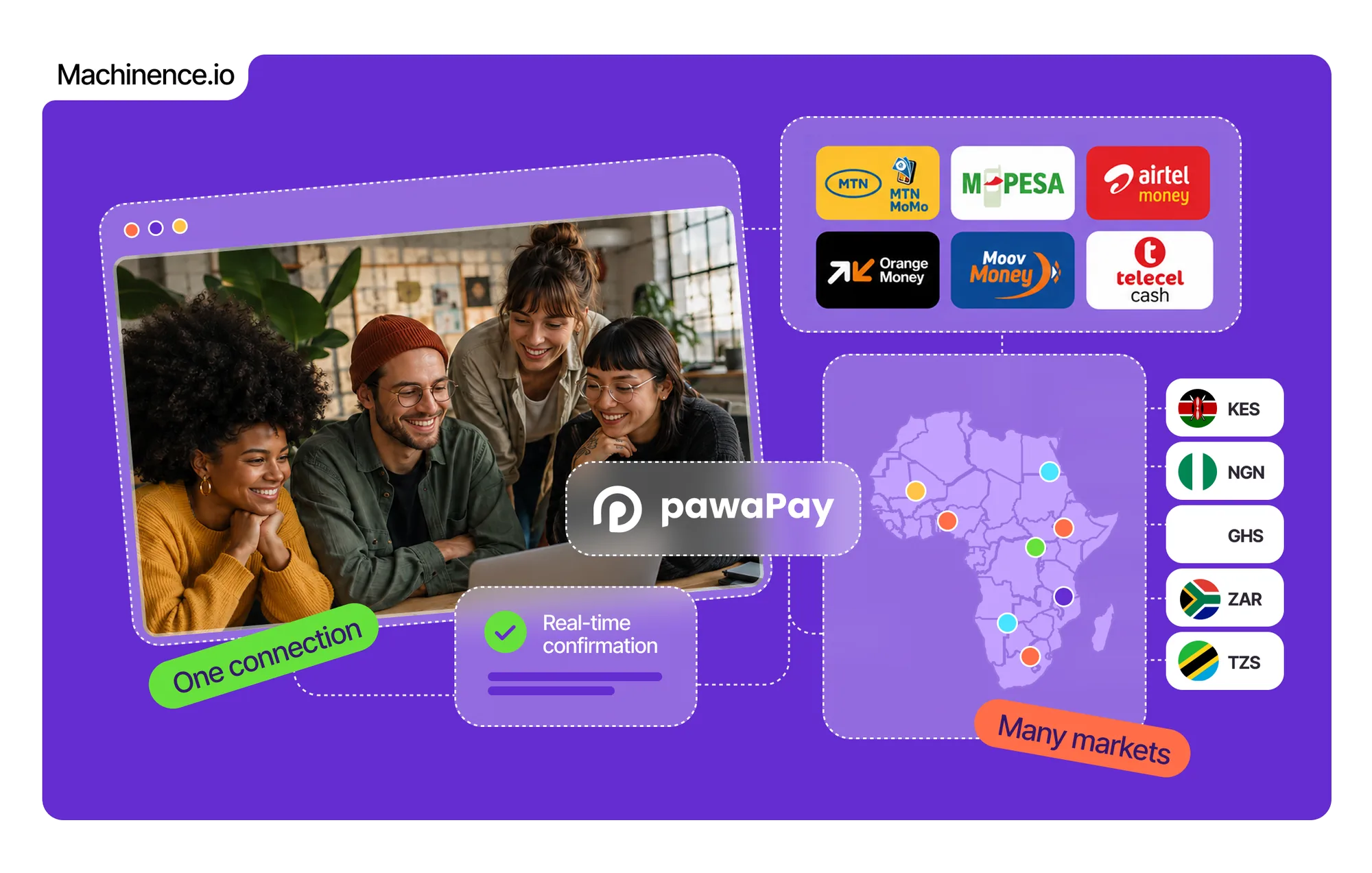
Invoicing and payments. Send professional invoices with automatic reminders. Clients pay by card through Stripe, or by mobile money through your own PawaPay account, and the money goes straight to you.
Bookkeeping that does itself. Snap receipts and Machinence records your income and expenses, then produces your profit and loss, balance sheet and cash flow.
Everything else a growing business needs. Email marketing, social posting, SEO, bookings, legal documents, business research and a website chatbot: 26 AI tools in all.
On a marketplace, a client hires a profile. On Machinence, a client hires your business.
Marketplace or your own business: side by side
| Upwork, Fiverr, Freelancer.com | Machinence | |
|---|---|---|
| Where customers come from | A shared marketplace, competing with everyone | Businesses found for you, with a reason to contact each one now |
| What you pay | Up to 15% to 20% of every job, plus bid or Connects costs | One flat monthly plan, from £99 (£69.30 for life with LAUNCH30) |
| Your share of each job | What is left after the platform’s cut | Everything your client pays you, less only the standard card or mobile money processing fee |
| Who owns the client | The platform | You |
| Your reputation | A star rating you do not control | Your own website, reviews and brand |
| Getting started with no reviews | Hard, often weeks without a job | Day one: contact real businesses straight away |
| Tools to run the business | None beyond messaging and payment | Website, store, CRM, invoicing, payments, bookkeeping, marketing: 26 AI tools |
| Getting paid | Through the platform, with holding periods | Directly to you, by card or mobile money |
On £1,000 of work a month, a 20% cut is £200 gone, every month. A Machinence plan costs less than that and gives you the customers and the tools as well.
Stop renting customers. Start owning them.
You already have the skills. What you need is customers who are yours and the tools to look after them. Machinence gives you both.
- Try it free for 7 days, no card needed, with 10 real leads to contact.
- Launch offer: 30% off for life with the code LAUNCH30, for new subscriptions until 31 December 2026. Launch & Scale is £69.30 a month instead of £99; Enterprise & Market Leader is £105 instead of £150.
Find your first customers: start your free trial
Frequently asked questions
Do I have to leave Upwork, Fiverr or Freelancer?
No. Many freelancers keep a profile while they build their own client list. The difference is that every client you find through Machinence is yours, with no commission.
I have no reviews yet. Can I still win work?
Yes. You contact businesses directly with a reason that matters to them now, so you are judged on your message and your work, not a star count.
Do I need technical skills?
No. The AI builds your website, store, logo and first messages from a short description.
Does it work outside the UK?
Yes. Find Customers searches locally or worldwide, and you can take card payments through Stripe or mobile money in every country PawaPay supports, through your own PawaPay account.
Sources
Figures for July to September 2026 unless stated.
- Upwork and Fiverr third quarter 2026 results: https://digiko.io/money/ai-freelance-pay-in-2026-what-upwork-and-fiverr-actually-report
- Fiverr third quarter 2026 results for sellers: https://beingguru.com/what-fiverrs-q3-2026-results-mean-for-freelance-sellers/
- Freelancer Limited third quarter 2026 business update: https://www.marketscreener.com/news/freelancer-3q26-business-update-ce785cdbdf8df527
- Upwork fees for freelancers: https://www.upwork.com/resources/is-upwork-free
- Fiverr seller fees 2026: https://vaultleap.com/blog/fiverr-fees-explained-2026
- Freelancer fees and charges: https://www.freelancer.ie/feesandcharges